About Splice
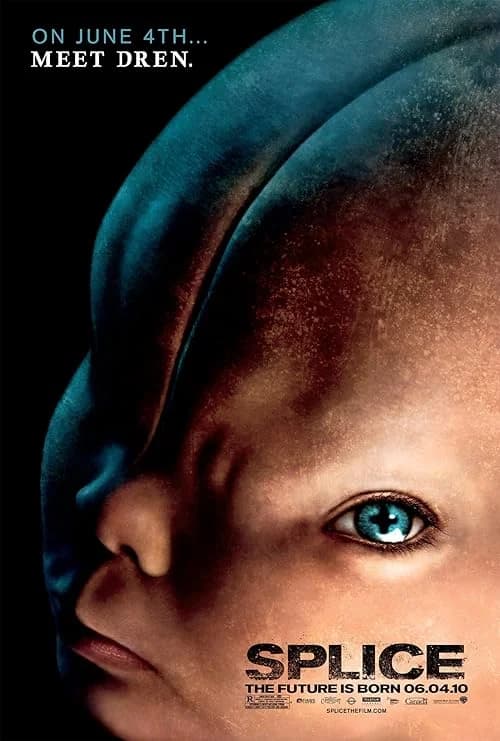
Splice (2009) is a provocative sci-fi horror film that delves into the ethical minefield of genetic engineering with chilling results. Directed by Vincenzo Natali, the story follows brilliant scientists Clive (Adrien Brody) and Elsa (Sarah Polley) who push beyond approved research to secretly combine human and animal DNA. Their creation, Dren, evolves at an alarming rate, transforming from curious specimen to something far more complex and dangerous.
The film excels in building palpable tension through its exploration of scientific ambition versus moral responsibility. Brody and Polley deliver compelling performances as researchers whose personal and professional boundaries blur disastrously. Delphine Chanéac's physical performance as Dren is remarkably unsettling, capturing the creature's rapid development from innocent to intelligent to menacing.
Natali's direction creates a clinical yet increasingly claustrophobic atmosphere, using the sterile lab environments to contrast with the messy biological and emotional consequences of the experiment. The practical effects and creature design remain impressively disturbing years later. While the third act ventures into more conventional horror territory, the film's central questions about playing god with genetics linger.
Viewers should watch Splice for its intelligent approach to science-gone-wrong horror, strong performances, and willingness to confront uncomfortable questions about creation, parenthood, and scientific ethics. The 5.8 IMDb rating undersells this thought-provoking film that remains relevant in our age of advancing biotechnology.
The film excels in building palpable tension through its exploration of scientific ambition versus moral responsibility. Brody and Polley deliver compelling performances as researchers whose personal and professional boundaries blur disastrously. Delphine Chanéac's physical performance as Dren is remarkably unsettling, capturing the creature's rapid development from innocent to intelligent to menacing.
Natali's direction creates a clinical yet increasingly claustrophobic atmosphere, using the sterile lab environments to contrast with the messy biological and emotional consequences of the experiment. The practical effects and creature design remain impressively disturbing years later. While the third act ventures into more conventional horror territory, the film's central questions about playing god with genetics linger.
Viewers should watch Splice for its intelligent approach to science-gone-wrong horror, strong performances, and willingness to confront uncomfortable questions about creation, parenthood, and scientific ethics. The 5.8 IMDb rating undersells this thought-provoking film that remains relevant in our age of advancing biotechnology.