
About The Scarlet Letter
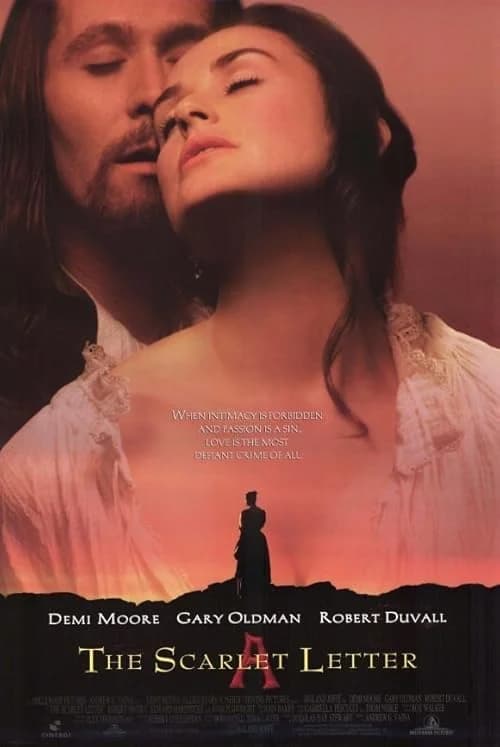
The 1995 film adaptation of Nathaniel Hawthorne's 'The Scarlet Letter' brings the classic tale of forbidden love and societal condemnation to vivid life. Directed by Roland Joffé, this dramatic romance stars Demi Moore as Hester Prynne, a strong-willed woman in 17th century Puritan New England who bears a child out of wedlock and refuses to name the father. Gary Oldman delivers a compelling performance as Reverend Arthur Dimmesdale, the tormented minister secretly involved with Hester, while Robert Duvall portrays the vengeful Roger Chillingworth, Hester's estranged husband seeking retribution.
While the film takes creative liberties with Hawthorne's original narrative, it powerfully explores themes of hypocrisy, shame, and redemption against the stark backdrop of Puritan society. The production design authentically recreates the harsh colonial setting, and the cinematography captures both the beauty and severity of the New England landscape. Demi Moore's portrayal of Hester emphasizes the character's resilience and defiance in the face of public humiliation, wearing the embroidered scarlet 'A' as both punishment and personal statement.
Despite receiving mixed critical reception, this adaptation remains worth watching for its strong performances and emotional depth. The film examines how societies use shame as control while celebrating individual strength and love's enduring power. For viewers interested in historical dramas, literary adaptations, or stories about social justice and personal integrity, 'The Scarlet Letter' offers a compelling cinematic experience that continues to resonate with contemporary audiences.
While the film takes creative liberties with Hawthorne's original narrative, it powerfully explores themes of hypocrisy, shame, and redemption against the stark backdrop of Puritan society. The production design authentically recreates the harsh colonial setting, and the cinematography captures both the beauty and severity of the New England landscape. Demi Moore's portrayal of Hester emphasizes the character's resilience and defiance in the face of public humiliation, wearing the embroidered scarlet 'A' as both punishment and personal statement.
Despite receiving mixed critical reception, this adaptation remains worth watching for its strong performances and emotional depth. The film examines how societies use shame as control while celebrating individual strength and love's enduring power. For viewers interested in historical dramas, literary adaptations, or stories about social justice and personal integrity, 'The Scarlet Letter' offers a compelling cinematic experience that continues to resonate with contemporary audiences.


