About Titane
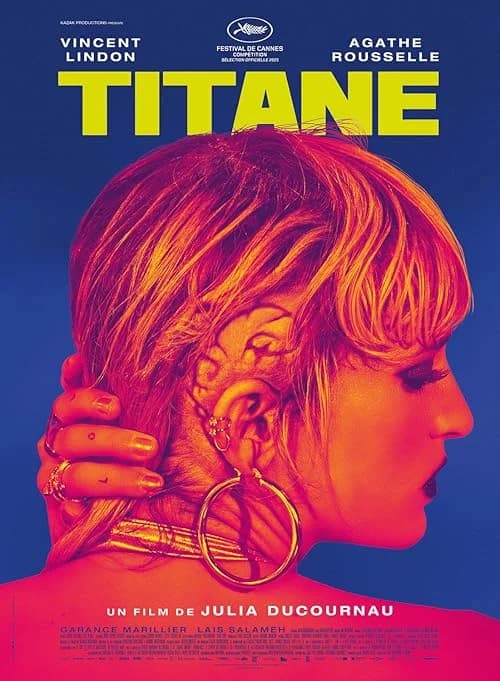
Julia Ducournau's 'Titane' is a visceral, genre-defying masterpiece that won the prestigious Palme d'Or at Cannes. The film follows Alexia, a dancer with a titanium plate in her skull following a childhood car accident, who develops a bizarre and violent sexual attraction to automobiles. After committing a series of brutal murders, she goes on the run, disguising herself as a missing boy to evade capture by assuming the identity firefighters are desperately seeking.
Agathe Rousselle delivers a fearless, physically demanding performance as Alexia, conveying profound trauma and alienation without relying on conventional dialogue. Vincent Lindon is equally compelling as the grieving fire captain who accepts her as his long-lost son, creating one of cinema's most unsettling father-child relationships. Ducournau's direction is audacious and uncompromising, blending body horror, psychological thriller, and familial drama into a cohesive, disturbing whole.
Viewers should watch 'Titane' for its bold exploration of identity, trauma, and the boundaries of the human body. The film's shocking imagery and narrative twists make it an unforgettable experience that challenges conventional storytelling. While not for the faint of heart, it represents a landmark in contemporary French cinema that continues to provoke discussion about gender, technology, and what it means to be human in an increasingly mechanized world.
Agathe Rousselle delivers a fearless, physically demanding performance as Alexia, conveying profound trauma and alienation without relying on conventional dialogue. Vincent Lindon is equally compelling as the grieving fire captain who accepts her as his long-lost son, creating one of cinema's most unsettling father-child relationships. Ducournau's direction is audacious and uncompromising, blending body horror, psychological thriller, and familial drama into a cohesive, disturbing whole.
Viewers should watch 'Titane' for its bold exploration of identity, trauma, and the boundaries of the human body. The film's shocking imagery and narrative twists make it an unforgettable experience that challenges conventional storytelling. While not for the faint of heart, it represents a landmark in contemporary French cinema that continues to provoke discussion about gender, technology, and what it means to be human in an increasingly mechanized world.